

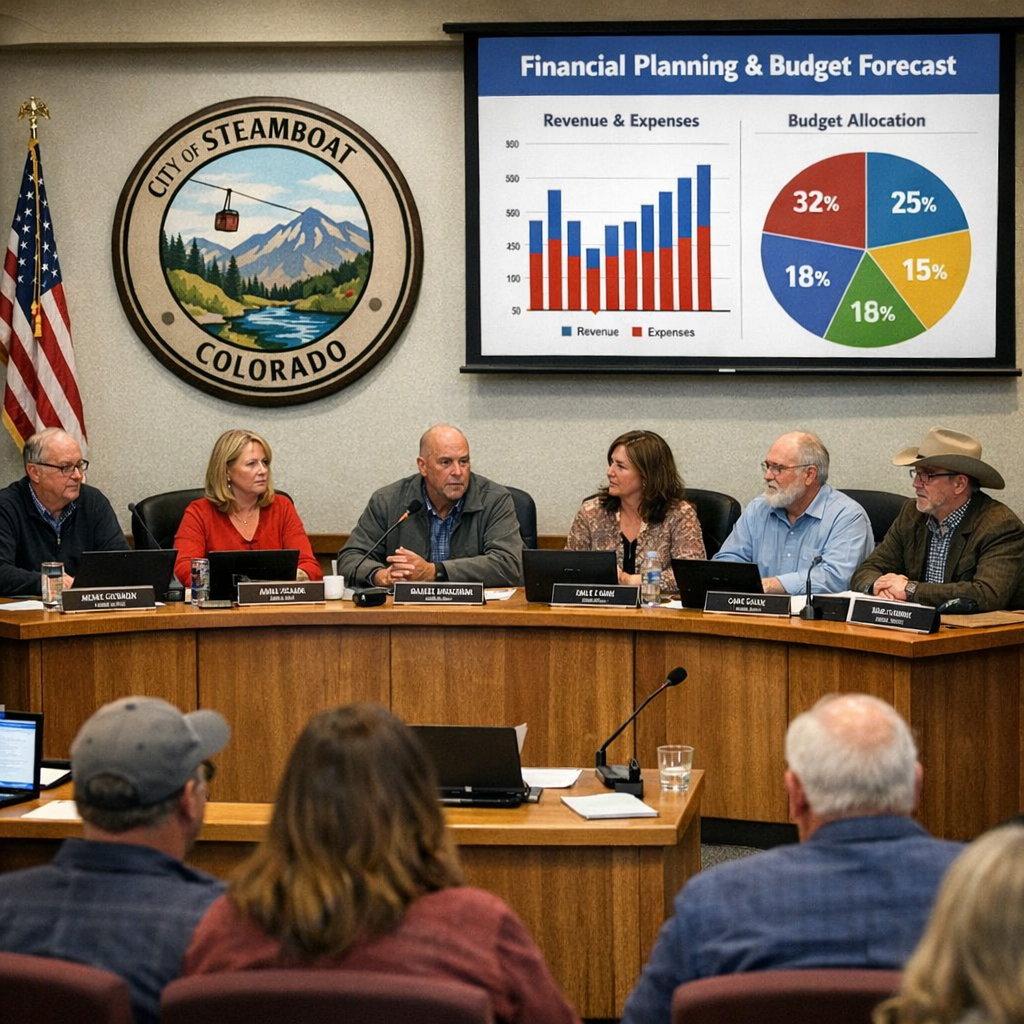
Steamboat Springs city leaders are actively exploring strategies to diversify the city’s revenue streams, aiming to reduce the current heavy dependence on sales tax. This initiative comes in response to the challenges posed by fluctuating tourism and economic downturns, which have highlighted the vulnerabilities of relying predominantly on sales tax revenue.
Current Revenue Structure
As of 2026, approximately 60% of Steamboat Springs’ general fund revenues are projected to come from sales tax. The remaining funds are sourced from charges for services, grants, and a 2-mill fire/EMS levy. This structure underscores the city’s significant reliance on sales tax, making it susceptible to economic fluctuations.
Challenges and Considerations
The city’s over-reliance on sales tax has become increasingly apparent during low-snow years and periods of reduced tourist spending. Such conditions have led to budget shortfalls, affecting the city’s ability to maintain service levels and invest in infrastructure. To address these challenges, city leaders are considering the introduction of more stable revenue sources, including the implementation of a property tax—a topic that has been under discussion for some time.
Path Forward
Finance Director Kim Weber emphasized the importance of defining the problem before proposing concrete solutions. Over the next two years, city staff plan to develop recommendations aimed at creating a more resilient financial model. This approach seeks to ensure that Steamboat Springs can sustain its services and infrastructure, regardless of economic conditions.
By diversifying its revenue streams, Steamboat Springs aims to build a more stable financial foundation, better equipped to navigate the uncertainties of tourism-dependent economies and to support the community’s long-term growth and well-being.